




Most CPET tray suppliers sell from a fixed catalogue: a handful of stock sizes, a handful of compartment configurations, take it or leave it. That works until your product does not fit one of those sizes, or your brand needs something a stock mould cannot deliver. This page sets out, specifically, what to check when comparing CPET tray suppliers, and how Carewell Group answers each of those checks.
What to actually check when comparing CPET tray suppliers
- Can they design to your product, compartment count, wall height, footprint, rather than only offering stock mould sizes?
- Do they understand freezer-to-oven requirements specifically, not just general food-safe claims, CPET’s core advantage is withstanding both extremes.
- Can they match lidding film and sealing equipment to the tray, or only supply the tray in isolation?
- Do they hold real food-packaging certifications, and can they provide documentation, not just a verbal assurance?
- What is the minimum order quantity for a custom mould or a custom-sized run?
How Carewell Group answers each of these
Designed to your product, not a stock catalogue
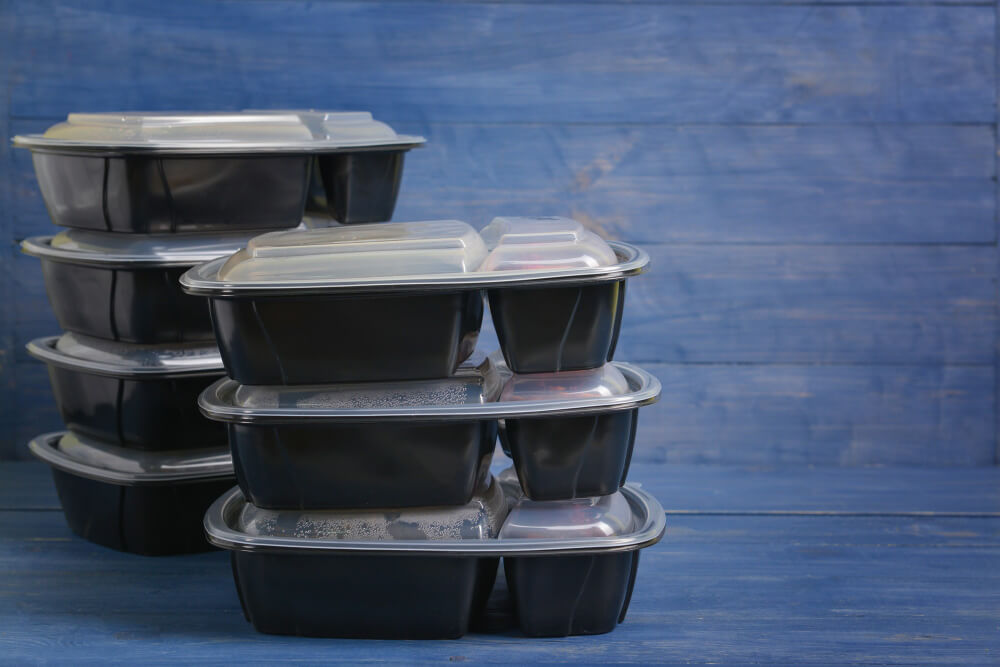
Carewell specifies CPET, APET and PP tray design to your actual product, portion size, compartment layout, wall height and footprint, rather than fitting your product into whichever stock mould happens to be closest. Where a stock size genuinely suits your product, we will tell you that too, custom tooling is not the right answer to every brief.
Built for the temperature range your product actually needs
CPET (crystallised polyethylene terephthalate) is chosen specifically because it withstands both freezer storage and oven reheating in the one tray, unlike APET, which suits chilled and ambient use but not oven reheating, or PP, which handles microwave reheating but not a conventional oven. Carewell specifies the material to your actual heating and storage path, not a default.
Lidding film and sealing matched to the tray
A tray specified without matching lidding film and sealing parameters is only half a solution. Carewell supplies lidding film matched to the tray material and your sealing equipment, so the finished pack actually seals reliably at your production line speed.
Food-safe and certified
Carewell Group is certified to ISO 9001:2015, ISO 14001:2015 and ISO 45001:2018, and is an APCO member. See certifications and standards for the documentation, rather than taking a food-safe claim on trust.
Custom sizing at a workable minimum order quantity
Custom tooling carries a genuine setup cost, which is why a minimum order quantity exists, but Carewell quotes that minimum against your actual production volume rather than a figure built for a national ready-meal brand, and will tell you plainly if your volume better suits a stock size for now.
Recyclability without compromising performance
CPET and APET trays are widely recyclable where local systems accept them, and for businesses wanting a fibre-based alternative for suitable applications, Carewell also supplies sugarcane bagasse trays. Material choice should be driven by what the product and the reheating method actually need first, sustainability credentials second, a tray that fails in the oven is not a sustainable outcome regardless of what it is made from.
Mould lead times and reorder planning
A genuinely custom tray mould has a real lead time, typically several weeks from confirmed design to first production run, which is worth planning around rather than discovering when you need trays urgently. Carewell will give you an honest mould lead time at quoting stage, not an optimistic one that slips once the order is confirmed, and will flag whether an interim stock size can bridge the gap while a custom mould is produced.
Stacking, nesting and freight efficiency
Tray design affects more than the product inside it, wall angle and nesting depth determine how many empty trays fit in a carton before filling, and how efficiently filled trays stack on a pallet without crushing lids or wasting cube space. This matters more than it looks: a tray that nests poorly can add real freight cost across a large order simply through wasted space, before a single tray is filled. Carewell reviews nesting and stacking as part of the design conversation, not as an afterthought once the mould is already cut.
A practical example: scaling from co-packer to in-house
A common path for a growing food brand is starting with a co-packer’s stock trays, then moving to a custom size once volume and margin justify an in-house line. At that transition point, the tray specification needs to match the new production line’s sealing equipment and cold-chain path, not simply replicate what the co-packer used. Carewell works through this transition directly: confirming line speed, sealing method and temperature path before finalising a mould, so the switch to custom trays does not introduce a new production problem.
Who this matters most for
- Ready-meal and meal-kit brands needing a genuine freezer-to-oven format.
- Food manufacturers scaling from a co-packer or small run into a custom-sized production line.
- Retailers and foodservice operators needing a specific compartment layout for portion control or presentation.
Comparing CPET against the alternatives properly
Choosing a tray material is not simply picking the most sustainable-sounding option, it is matching the material to the product’s actual journey from pack to plate. CPET earns its place specifically because it survives a freezer-to-oven cycle that neither APET nor PP can handle safely, so a business choosing CPET purely on cost or availability without confirming the reheating method risks a tray failure at the customer’s end, which is a far more expensive outcome than the material cost saved upfront. A proper comparison weighs the full path: storage temperature, transport time, reheating method and, only after those are locked in, recyclability and cost. Carewell will run this comparison with you rather than default to whichever tray happens to be cheapest to quote.
How Carewell Group helps
Carewell Group is an Australian food packaging manufacturer and supplier. We design and supply CPET, APET and PP trays to your product’s actual dimensions, temperature path and production line, with matched lidding film and a minimum order quantity quoted to your real volume.
Carewell can meet all your packaging needs for your business. Talk to our expert and we will work to your required MOQ. Call +61 (02) 8760 1491 or request samples and a design review. See also the full CPET trays range.
Want to launch your own food packaging brand instead? See white label CPET trays.
Working with your food safety and compliance team
A tray change is rarely a packaging-team-only decision for a food business operating under a HACCP or similar food safety plan, it usually needs sign-off that the new format holds the same shelf-life and temperature performance as whatever it replaces. Carewell provides the material specification documentation needed to support that internal review, rather than leaving your quality team to chase it down mid-changeover. Planning this step in alongside the mould lead time avoids a late-stage compliance delay pushing a launch date back.
Frequently asked questions
What makes Carewell’s CPET trays different from a stock catalogue supplier?
Trays designed to your product’s actual dimensions and compartment needs, material matched to your real temperature path, lidding film matched to the tray, and a minimum order quantity quoted to your actual volume.
Can Carewell design a custom compartment layout?
Yes, compartment count, wall height and footprint are specified to your product rather than limited to stock mould configurations.
Why does the material matter, CPET vs APET vs PP?
CPET withstands both freezer and oven use in one tray. APET suits chilled and ambient use but not oven reheating. PP handles microwave reheating but not a conventional oven. The right choice depends on your product’s actual storage and reheating path.
What should I check with any CPET tray supplier, not just Carewell?
Whether they design to your product or only sell stock sizes, whether they understand your specific temperature requirements, whether lidding film is matched to the tray, and whether food-safe certifications are documented.
Sources
- Food Standards Australia New Zealand, food contact materials: foodstandards.gov.au
- Australian Packaging Covenant Organisation: apco.org.au
Written by Alif Vasaya, digital and content strategy, Carewell Group. Carewell Group is an Australian packaging, food packaging, tape, industrial safety and 3PL supplier serving all of Australia. Last updated 21 September 2026.