






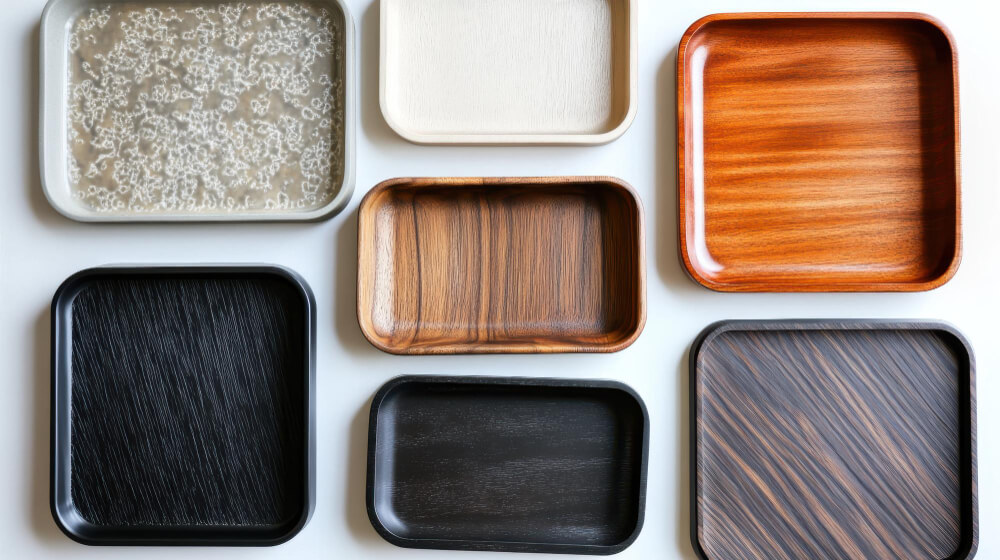
When we talk about types of trays, we’re really talking about how trays differ by material, compartment layout, use-case and sustainability profile. At Carewell Group, we offer a range of sustainable compartment trays (see our offering) that allow businesses to pick the right tray for the right job. This blog will walk you through the major tray types, their benefits and how to choose among them.
Why “Types of Trays” Matter
Selecting the wrong tray can lead to usability problems: food leaking, materials not holding up under heat or cold, branding failing to stand out, or sustainability goals not being met. By understanding the many types of trays, you can:
- Match tray material and layout to the food or product you’re packaging.
- Ensure compatibility with transport, reheating or freezing.
- Align with your sustainability or brand-image commitments.
- Improve efficiency in logistics, storage, and presentation.
Major Types of Trays by Material
Bagasse / Sugarcane Fibre Trays
Trays made from bagasse (the fibrous residue after sugarcane extraction) are gaining strong traction for sustainable packaging. They are often compostable or at least partly biodegradable. Quit Plastic+2ECOSOUL HOME INDIA+2
Good for single-use foodservice trays where disposal and eco-impact matter.
Molded Fibre / Pulp Trays
Molded pulp (or molded fibre) trays are often made from recycled paperboard/newsprint, and are used for protective or food-service trays. Wikipedia+1
They offer a sustainable alternative especially when you want structure but low cost material.
CPET / APET / PP (Plastics) & Hybrid Materials
For trays requiring reheating, freezing or high-performance features, trays made of CPET (crystalline polyethylene terephthalate), APET, PP or hybrid materials are common. From the Carewell page: “Choose from a wide range of Sustainable Compartment Trays in various sizes, shapes, and materials … from single-serve to multi-compartment designs.” Carewell Group Pty Ltd
They handle temperature extremes and heavy-duty use.
Metal / Stainless Steel Trays (less common for disposables)
While less often used in disposable food packaging, metal trays are discussed in broader “types of trays” considerations (e.g. for durability, reuse). sumkoka.com
For corporate kitchens, catering events or reusable service, these may be relevant.
Types of Trays by Compartment Layout & Function
When we speak of “types of trays”, layout is just as important as material. On the Carewell page you’ll see a classification table: Carewell Group Pty Ltd
- Single Compartment Tray – Simple one-space tray, ideal for large serves or minimal separation.
- 2-Compartment Tray – Two sections allow you to separate a main and a side, or hot and cold.
- 3-Compartment Tray – Popular for mains + two sides or sauce separate; good portion control.
- 5-Compartment Tray – Great for full meals: mains, two/three sides, snack/dessert.
- Lidded or Sealable Trays – Trays with lids or films for transport, stacking, takeaway or delivery.
- Ovenable, Freezer-Safe or Custom Branded Trays – Specialized trays for reheating, freezing or brand differentiation.
These variations allow businesses to pick trays suited to their offering: meal-prep, catering, retail ready-meals, institutional foodservice (schools, hospitals) etc.
Comparing Key Tray Types: A Practical View
| Type | Best For | Pros | Considerations |
|---|---|---|---|
| Bagasse single compartment | Takeaway large meals | Fully compostable, strong base | Might lack sectioning for sides |
| 3-Compartment bagasse/tray | Meal-prep, balanced meals | Good portion separation, sustainable | Slightly higher cost than basic tray |
| 5-Compartment molded fiber | Institutional catering, multi-course | Lots of sections, efficient service | Requires correct portion planning |
| CPET/Plastic hybrid tray | Reheat / freezer / delivery meals | High durability, temperature tolerant | Material recycling needs local infrastructure |
| Lidded/Sealable tray | Delivery, stacking, transport | Secure, stackable, professional branding | Need compatible lids/seal films |
How to Choose the Right Tray Type for Your Operation
Since you’re working in packaging + logistics + brand value (with Carewell Group), here are strategic filters:
- Material vs Food Application: Hot meals, reheating = CPET/PP; cold meal or cooled food = bagasse/molded fiber.
- Layout vs Portioning: How many sides? How many compartments do you need?
- Transport & Storage Conditions: Are trays going through a delivery chain, freezer, microwave?
- Brand & Sustainability Goals: Does the tray material align with your eco-mission? Seen on Carewell page: “Quality Materials … Choose from bagasse, molded fiber or paperboard for the perfect balance of strength, heat resistance, and sustainability.” Carewell Group Pty Ltd
- Cost vs Volume: High-compartment, branded trays cost more—does your user base/volume justify it?
- Compatibility with Logistics & Storage: Stackability, lid/seal integration, transport efficiency.
Why Carewell Group’s Tray Solutions Stand Out
Carewell Group’s sustainable compartment trays are customisable in size, material and branding. Key benefits from the product page: Carewell Group Pty Ltd
- Australian food safety/compliance.
- Custom branding available.
- Range of materials and compartment layouts.
- Support for both hot and cold applications.
- Sustainability built-in (compostable or recyclable options).
From single compartment takeout to 5-compartment institutional catering trays, this broad offering aligns with your mission: “packaging, industrial & safety, logistics and 3PL needs… delivering excellence, constant innovation and preserving the environment.”
Final Thoughts
Understanding types of trays is more than semantics—it’s about making informed, strategic choices for your packaging, service model and brand promise. Whether you’re outfitting a meal-prep line, a corporate cafeteria, or a delivery-centric kitchen, picking the right tray type (material + compartment layout + transport compatibility) pays off in presentation, efficiency and sustainability.
For your business or your clients, choosing the correct tray type can differentiate from “just packaging” to “premium packaging aligned with brand, eco-values and logistics flow.”
Request a Quote
Carewell Group Pty Ltd
Unit 27/191 McCredie Road, Smithfield, NSW 2164
Phone: +61 0477 123 699
Email: sales@carewellgroup.com.au | info@carewellgroup.com.au | logistics@carewellgroup.com.au