




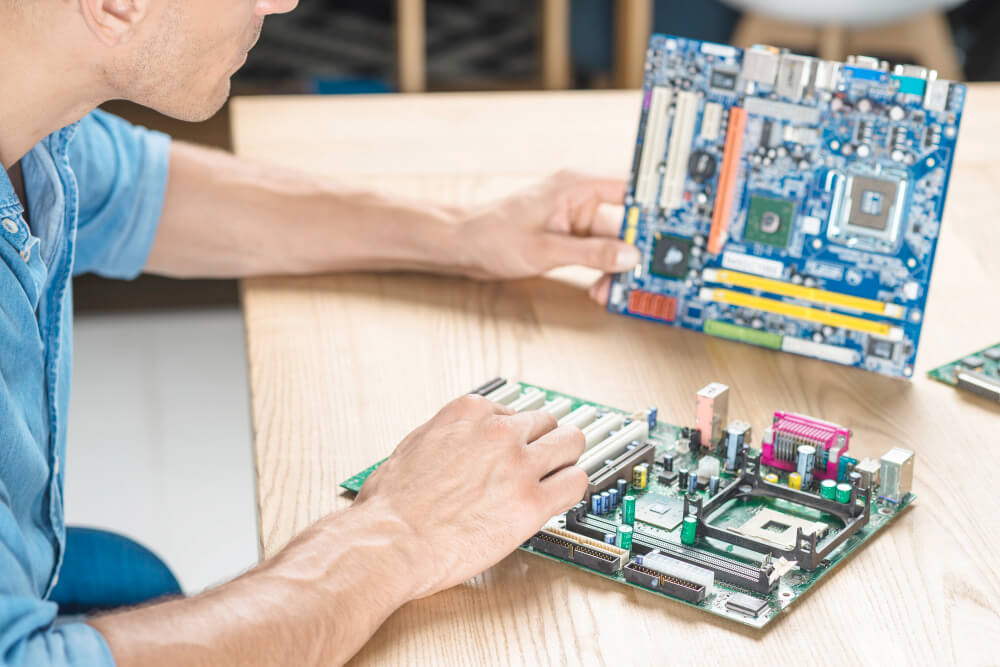
Adhesives for faster PCB assembly are becoming the secret weapon inside modern electronics manufacturing.
Once upon a time, engineers relied purely on screws, clips, solder, and mechanical retention. Today? High-performance adhesives are stepping in to stabilise components, eliminate vibration, speed up placement, and streamline the entire PCB assembly workflow.
And the ROI is huge.
In a recent electronics manufacturing case study (shared below), a mid-sized Australian EMS plant achieved a 25% reduction in assembly time simply by moving from mechanical fixtures to precision-applied structural and UV-curing adhesives.
Let’s unpack how that happened, why it works, and how adhesive innovation is quickly becoming the backbone of high-speed PCB and electronics assembly.
Why Adhesives Are Transforming Electronics Manufacturing
Adhesives in PCB assembly aren’t just about “sticking things down.”
They’re engineering tools that:
• Speed up SMT component placement
• Stabilise parts during reflow
• Reduce thermal stress points
• Improve vibration resistance
• Support miniaturisation
• Enable automation
• Reduce the need for extra hardware
In short: they make the entire assembly line smoother, faster, and more reliable.
Carewell Group works across multiple packaging and industrial supply categories and these innovations matter especially for businesses moving towards high-speed, low-waste processes (https://carewellgroup.com.au/custom-solutions/).
Case Study: How One Electronics Manufacturer Achieved 25% Faster PCB Assembly
A mid-tier Australian electronics facility specialising in consumer-grade devices tested three adhesive upgrades to reduce assembly bottlenecks. Here’s what changed and what actually delivered the 25% jump.
Phase 1: Component Securing With Faster-Setting Adhesive
Previously, operators used mechanical clips for holding components before reflow a slow, manual process.
Switching to a low-viscosity, fast-curing adhesive:
• Eliminated clips entirely
• Reduced pre-reflow prep time
• Allowed seamless SMT automation
• Removed 1 full step from the line
This alone saved 8% of total assembly time.
Phase 2: UV-Curing Adhesives for High-Speed Bonding
Key assemblies that previously required 30–60 seconds of clamp time were replaced with UV-curing adhesive.
Results:
• Curing time dropped to under 3 seconds
• Robots were able to place & cure instantly
• Operators cut idle time dramatically
• Precision alignment improved
This change delivered another 10% time reduction.
Phase 3: Thermal & Structural Adhesives for Component Protection
Mechanical spacers and screws were replaced with hybrid structural adhesives.
Benefits:
• No torque-checking required
• No alignment rework
• No loose hardware issues
• Stronger shock absorption performance
This optimisation shaved an additional 7% off total takt time.
Final Result: 25% Faster Full-Line Assembly
Zero compromise on:
• Product reliability
• Heat tolerance
• Electrical insulation
• Long-term stability
This is why adhesives are now a core part of smart manufacturing strategies especially for teams embracing automation.
A technical deep-dive on adhesive performance can be found here
https://share.google/lgtCmZysrDNTmlqtf
Why Adhesives Outperform Traditional Fastening in PCB Assembly
1. Faster Automation Integration
Robots can dispense adhesives instantly no screws, no mechanical alignment.
2. Better Stability During Reflow
Adhesives prevent tombstoning, shifting, and skewing in SMT processes.
3. Reduced Material Use
Fewer fixtures = lower cost and less handling.
4. Lower Heat Stress
Some adhesives distribute heat more evenly, protecting delicate components.
5. Improved Miniaturisation
As devices shrink, screws and clips become impractical adhesives scale effortlessly.
Adhesive Types That Speed Up PCB Assembly
UV-Curing Adhesives
Cure in seconds under a UV lamp; ideal for:
• Wire tacking
• Dome bonding
• Connector reinforcement
Epoxy & Hybrid Structural Adhesives
Used for:
• Housing assembly
• Shock absorption
• High-stress anchoring
Conductive Adhesives
Enable electronic contact without solder; often used in flexible electronics.
Thermally Conductive Adhesives
Support heat dissipation crucial for LED, CPU, and power electronics.
SMT Adhesives
Specialised glue to hold SMDs in place during reflow.
Additional Operations That Benefit From Adhesive Integration
Switching from mechanical to adhesive bonding speeds up:
• PCB-to-housing assembly
• Wire routing
• Strain relief attachment
• Connector mounts
• Internal battery housing
• Display module bonding
These improvements reduce both assembly time and long-term warranty claims.
Strengthen Topical Authority
Use these Carewell links to enhance internal linking and relevance:
• Sustainability – https://carewellgroup.com.au/sustainability/
• Packaging Category – https://carewellgroup.com.au/category/packaging/
• Wraps – https://carewellgroup.com.au/product-category/wraps/
• Custom Solutions – https://carewellgroup.com.au/custom-solutions/
The Future: High-Speed Adhesives Built for Electronics 4.0
Emerging adhesive technologies will push assembly speeds even further:
• dual-cure adhesives (UV + heat)
• precision micro-dot dispensing
• nano-reinforced bonding systems
• heat-activated adhesives for automated lines
• fully automated dispensing robots
• substrate-specific fast-curing epoxies
Electronics manufacturing is entering an era where adhesives are not just an accessory they’re a strategic performance driver.
Want to Upgrade Your Assembly Process?
Carewell Group supports high-speed industrial operations with packaging, tools, and logistics solutions tailored for modern production efficiency.
Carewell Group Pty Ltd
Unit 27/191, Mccredie Road, Smithfield, NSW 2164
Phone: +61 0477 123 699
Email: sales@carewellgroup.com.au | info@carewellgroup.com.au | logistics@carewellgroup.com.au