




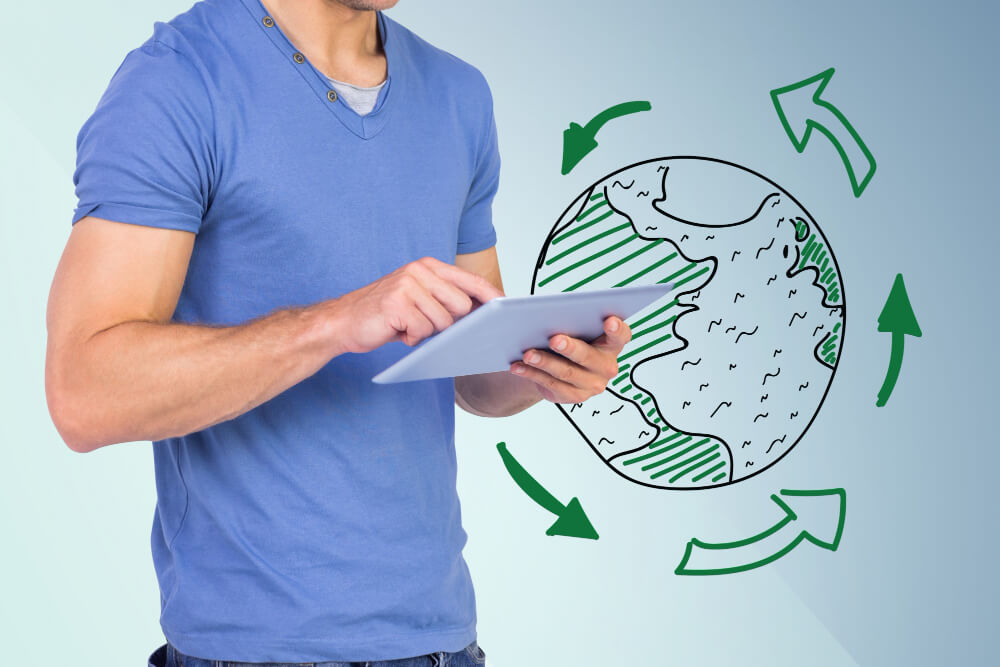
The circular economy is more than a sustainability buzzword — it’s a complete rethinking of how we design, produce, and use packaging. In Australia, where packaging waste accounts for a significant share of landfill material, businesses are under pressure to transition away from the traditional “take-make-dispose” model.
Instead, the circular economy encourages a system where materials are kept in use longer, waste is minimised, and resources are continuously regenerated. For the packaging industry, this shift is already reshaping how brands design their products, choose materials, and communicate with consumers.
What Is the Circular Economy in Packaging?
In simple terms, the circular economy is an approach that keeps packaging materials in circulation — reused, recycled, or composted — rather than discarded after a single use.
It replaces the old linear model with one focused on resource efficiency, closed-loop systems, and product stewardship. In packaging, that means designing materials that are:
- Recyclable or compostable at end of life.
- Made from recycled content instead of virgin materials.
- Designed for reuse, such as refillable or returnable systems.
The goal isn’t just less waste — it’s smarter design and shared responsibility across the entire supply chain.
To see how this aligns with business innovation, visit Carewell Group’s About Us page.
Why the Circular Economy Matters in Australia
Australia generates roughly 5.5 million tonnes of packaging waste each year, with only about half being recycled. The Australian Government, through the National Packaging Targets 2025, has made it clear that all packaging must be 100% reusable, recyclable, or compostable within the next few years.
The circular economy offers a roadmap to meet these targets by:
- Reducing dependency on virgin materials (especially plastics).
- Encouraging design innovation through eco-friendly alternatives.
- Promoting collaboration between manufacturers, recyclers, and retailers.
- Building brand loyalty by aligning with consumer sustainability values.
How Brands Are Adapting
Australian companies are already integrating circular economy principles into their packaging strategies:
- Switching to renewable materials: Brands are adopting bagasse, recycled cardboard, and bioplastics to replace single-use plastics.
- Designing for recyclability: Simplified materials and clear labelling make recycling easier and more effective.
- Developing take-back and reuse programs: Some retailers now offer collection schemes for packaging reuse or closed-loop recovery.
- Using life cycle assessments: Businesses are analysing packaging from production to disposal to reduce carbon impact at every stage.
These steps not only meet environmental regulations but also make brands more competitive in a sustainability-driven marketplace.
Innovation Driving the Shift
Advances in packaging technology and material science are making circular solutions more accessible. For example:
- Mono-material packaging improves recyclability without sacrificing barrier properties.
- Water-based inks and adhesives eliminate toxic residues in recycling.
- Smart packaging systems help trace materials through the supply chain, ensuring accountability.
These innovations bridge the gap between eco-conscious ideals and real-world practicality — helping businesses achieve both performance and sustainability.
For global insights into circular packaging innovation, visit this external resource.
The Business Benefits of a Circular Model
Adopting circular economy practices isn’t just good for the environment — it makes solid business sense. Companies that invest in sustainable packaging can expect:
- Cost savings through material efficiency and waste reduction.
- New market opportunities in eco-conscious product lines.
- Enhanced brand reputation with customers and partners.
- Regulatory compliance that protects against future penalties or bans.
In short, the circular economy transforms packaging from a cost centre into a competitive advantage.
Challenges to Overcome
Transitioning to circular systems isn’t without hurdles. Businesses face:
- Limited recycling infrastructure in some regions.
- Higher upfront costs for alternative materials.
- Consumer confusion about proper disposal methods.
Despite these obstacles, the momentum toward circular packaging is accelerating — supported by both policy and consumer demand. Companies that act early are positioning themselves as industry leaders rather than followers.
The Future of Packaging in a Circular World
By 2030, the Australian packaging sector will look very different. Expect to see:
- Greater use of biobased materials and compostable alternatives.
- Expansion of reuse systems across retail and food sectors.
- Mandatory extended producer responsibility (EPR) schemes that hold brands accountable for packaging waste.
Businesses that embrace these shifts now will lead the transition — shaping a packaging industry that’s both profitable and sustainable.
At Carewell Group, we support brands through this transformation, helping design packaging that performs well, complies with regulations, and supports circular principles.
Final Thoughts
The circular economy isn’t a distant ideal — it’s the future standard of doing business. As Australia’s packaging industry evolves, brands that prioritise sustainable design, responsible sourcing, and closed-loop systems will not only protect the planet but also earn lasting customer trust.
Carewell Group Pty Ltd
Unit 27/191 McCredie Road, Smithfield, NSW 2164
Phone: +61 0477 123 699
Email: sales@carewellgroup.com.au | info@carewellgroup.com.au | logistics@carewellgroup.com.au
Smart Tip: Circular packaging isn’t about doing less harm — it’s about doing more good. Reimagine your packaging as a resource, not a waste stream.

