




Introduction: The Packaging Revolution Is Already Here — Is Your Business Ready?
Walk down the aisle of any major Australian retailer, browse the purchasing criteria of any large enterprise buyer, or read the terms of any government contract issued in the last three years, and one thing becomes unmistakably clear: sustainable packaging is no longer a “nice to have.” It is a commercial imperative.
Australia generates approximately 2.5 million tonnes of plastic waste annually, and the packaging sector is one of the single largest contributors. For businesses — from food manufacturers in regional Queensland to e-commerce distributors in Western Sydney — the pressure to act is coming from every direction simultaneously: regulators tightening single-use plastic bans, major retailers demanding supplier compliance, consumers voting loudly with their wallets, and investors increasingly weighting ESG performance in their valuations.
But here is where the conversation often goes wrong for B2B operators: eco-friendly packaging is frequently discussed in terms of corporate social responsibility, of “doing the right thing,” of brand image. While all of that matters, it misses the far more compelling argument for business leaders managing real budgets and real supply chains.
Sustainable packaging is a competitive advantage. It is a cost-efficiency strategy. It is a risk-mitigation tool. And for Australian businesses operating in 2026, it is rapidly becoming a prerequisite for market access.
This guide cuts through the greenwash, the jargon, and the generic advice. What you will find here is a structured, practical, and deeply Australian take on how to approach environmentally friendly packaging — the types available, the regulations you need to understand, the transition steps you can actually execute, and the measurable return on investment you can take to your board.
Let’s get into it.
Part 1: Why Australian Businesses Can No Longer Afford to Ignore This
1.1 The Regulatory Landscape Is Accelerating
Australia’s approach to packaging regulation has shifted from voluntary industry targets to legally enforceable obligations, and the pace is only increasing.
The 2025 National Packaging Targets — developed under the Australian Packaging Covenant Organisation (APCO) — set industry-wide goals that directly affect any business that designs, imports, or uses packaging:
- 100% of Australia’s packaging to be recyclable, compostable, or reusable
- 70% of plastic packaging to be recycled or composted
- 50% average recycled content included in packaging
- Problematic and unnecessary single-use plastics to be phased out
State-level legislation adds further urgency. Victoria, Queensland, New South Wales, South Australia, and Western Australia have all enacted or are actively progressing bans on specific plastic packaging items. What is permissible in one state today may be banned in another tomorrow — and national harmonisation is the direction of travel.
For B2B businesses, non-compliance carries direct financial consequences: fines, contract disqualification, and the reputational cost of being publicly listed as a laggard.
1.2 Your Customers Are Already Demanding It
If you supply to major retailers — Woolworths, Coles, Bunnings, or any national foodservice chain — you will have encountered supplier sustainability questionnaires. These are no longer tick-box exercises. Procurement teams at major buyers are systematically delisting suppliers who cannot demonstrate credible sustainability progress.
For businesses operating in export markets, the requirements are even more stringent. The European Union’s Packaging and Packaging Waste Regulation (PPWR) creates obligations that flow through global supply chains, affecting any Australian exporter with EU market ambitions.
1.3 The Consumer Signal Is Unmistakable
A 2024 Australian survey by the Planet Ark Environmental Foundation found that 73% of Australian consumers say they would choose a product with sustainable packaging over a competitor with conventional packaging, all else being equal. Among 25–44 year olds — the primary household purchasing demographic — that figure rises above 80%.
For B2B businesses, this matters because your customers’ customers are driving the demand signal back through the supply chain. When consumer demand for sustainable products intensifies, it becomes your buyers’ problem, which rapidly becomes your problem.
1.4 The Cost Argument Is Shifting
The historical objection to sustainable packaging — “it costs more” — is becoming less and less defensible for three reasons:
Scale: As sustainable packaging volumes have grown globally and in Australia, manufacturing costs have fallen substantially. Many sustainable alternatives are now cost-competitive with conventional options, particularly when total lifecycle costs are considered.
Waste reduction: Lighter, more efficiently designed packaging reduces freight costs, storage costs, and waste disposal costs. These savings are real and recurring.
Risk pricing: The cost of not transitioning — regulatory penalties, contract loss, emergency reformulation when a specific material is banned — is increasingly high. Sustainability investment is partly risk insurance.
Part 2: A Plain-Language Taxonomy of Eco-Friendly Packaging Options
One of the greatest sources of confusion in this space is terminology. “Biodegradable,” “compostable,” “recyclable,” and “sustainable” are used interchangeably in marketing materials but mean very different things technically. Here is a clear breakdown.
2.1 Recyclable Packaging
Recyclable packaging can be processed through existing or emerging waste management infrastructure and remade into new material. However, “recyclable” does not mean recycled — it means capable of being recycled under the right conditions.
Key considerations for B2B operators:
- The recyclability of a material depends on the availability of local collection and processing infrastructure, which varies by region
- Multi-material or composite packaging (e.g., plastic film laminated to cardboard) is often not recyclable because the materials cannot be separated
- Australia’s recycling infrastructure is expanding but remains inconsistent across postcodes — what your packaging supplier tells you is technically recyclable may not be practically recycled in your customers’ local area
What this means for you: Prioritise mono-material packaging where possible — single-polymer plastic pouches, pure cardboard cartons, or glass containers without plastic components — because these are far more likely to actually enter the recycling stream.
2.2 Compostable Packaging
Compostable packaging breaks down into non-toxic biomass under composting conditions. There are two key categories:
- Home compostable: breaks down in a typical backyard compost bin within 12 weeks at ambient temperatures. This is a very high standard and currently applies to a limited range of materials.
- Commercially compostable (industrial compostable): breaks down at the elevated temperatures found in commercial composting facilities. This is more common, but is only useful if your customers have access to commercial composting collection.
Australia uses the Australian Standard AS 4736-2006 (commercial compostability) and AS 5810-2010 (home compostability) to certify compostable packaging. The seedling logo (for commercial composting) and ABA home compost logo are the marks to look for.
Critical watch-out: Compostable packaging placed in standard recycling bins contaminates the recycling stream. The practical value of compostable packaging depends entirely on the end-of-life pathway available to your customer.
2.3 Biodegradable Packaging
“Biodegradable” is arguably the most misused term in sustainability marketing. Technically, almost everything biodegrades eventually — the question is how long it takes and under what conditions.
Standard plastic labelled “biodegradable” may take decades to fully break down, particularly in landfill where conditions (heat, light, oxygen) are not conducive to biological breakdown. Some “biodegradable” additives in plastics actually fragment them into microplastics rather than mineralising them completely.
For B2B procurement purposes: Biodegradable claims without certified standards attached should be treated with significant scepticism. Demand third-party certification, not marketing copy.
2.4 Reusable Packaging
Reusable packaging is designed for multiple uses before end-of-life. In B2B contexts, this can mean:
- Reusable plastic pallet wrapping systems
- Returnable transit packaging (RTPs) such as reusable crates, pallets, and totes
- Refillable bulk containers for food, beverage, or chemical products
The economic case for reusable packaging in B2B logistics is often compelling — the upfront investment in durable packaging is frequently offset within 8–18 use cycles, after which the ongoing cost per unit drops dramatically.
2.5 Recycled Content Packaging
Using packaging manufactured from post-consumer recycled (PCR) material creates demand for the recycled material stream, which is essential for making the recycling economy function. Recycled content packaging can be made from recycled plastic, paper, glass, or aluminium.
Australian government procurement guidelines increasingly specify minimum recycled content requirements, making this relevant to any business in the government supply chain.
Part 3: Specific Materials and Solutions for Australian B2B Operations
3.1 CPET Trays: The Sustainable Food Service Standard
For food manufacturers, processors, and foodservice operators, CPET (Crystallised Polyethylene Terephthalate) trays are one of the most significant developments in sustainable packaging.
CPET is a thermoplastic that is:
- Ovenable — tolerating temperatures from -40°C to +220°C, making it suitable for cook-chill and ready meal applications
- Recyclable — accepted in the PET recycling stream, unlike many multi-layer food trays
- Lightweight — reducing freight costs and carbon emissions compared to aluminium alternatives
- Suitable for MAP (Modified Atmosphere Packaging) — extending shelf life and reducing food waste
For Australian food businesses looking at sustainable, high-performance food packaging, CPET represents a compelling alternative to conventional APET/PP or aluminium. Explore CPET tray options available in Australia →
The food waste reduction angle is particularly important here: packaging that extends shelf life contributes to sustainability outcomes far beyond the packaging material itself. Every tonne of food waste avoided in Australia represents a significant reduction in lifecycle greenhouse gas emissions.
3.2 Vacuum Sealed Packaging: Efficiency and Sustainability Combined
Vacuum sealed packaging is often overlooked in sustainability conversations, but it deserves close attention. By removing oxygen from the package, vacuum sealing:
- Extends product shelf life significantly — reducing food spoilage and the associated waste
- Reduces packaging bulk — products can be packed more densely, reducing freight costs and carbon emissions per unit shipped
- Eliminates the need for chemical preservatives in many applications — a benefit for both product purity and environmental impact
A common concern for businesses considering vacuum packaging is odour containment — particularly relevant for food, fragrance, or agricultural products. Understanding how vacuum sealed bags manage odour is important for specification and quality assurance decisions.
When implementing vacuum packaging at scale, efficient application methodology matters. Properly using a packing tape dispenser and associated tools as part of a systematic packing workflow reduces material waste, speeds throughput, and improves pack quality — all contributing to both operational efficiency and reduced material consumption.
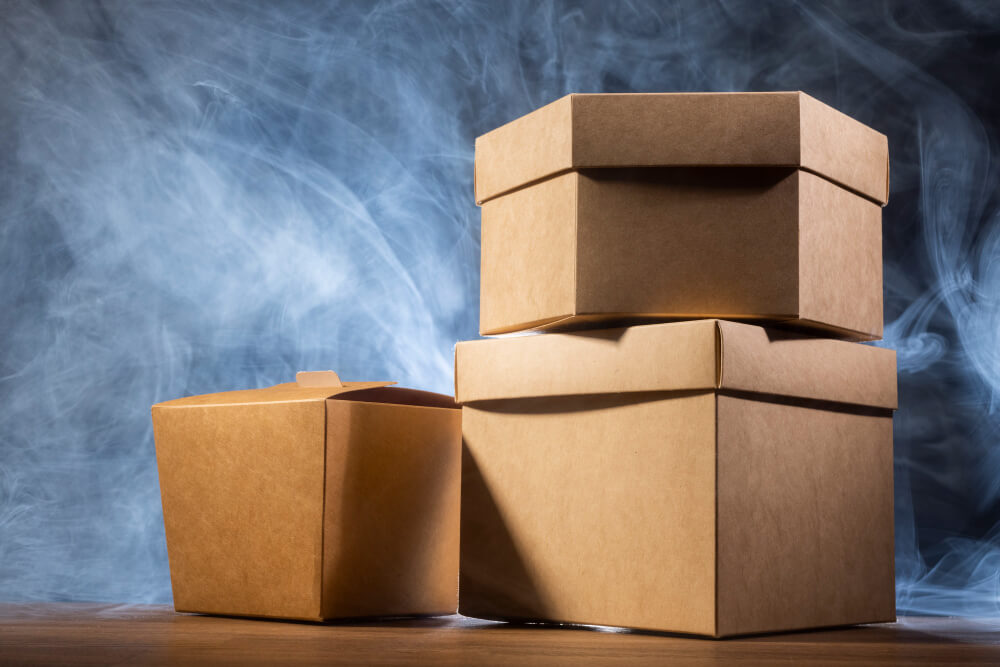
3.3 Paper and Cardboard: The Workhorse of Sustainable Packaging
Corrugated cardboard, kraft paper, and paperboard are the most widely used sustainable packaging materials in Australian B2B logistics — and for good reason.
Key attributes:
- High recyclability — paper and cardboard are collected and recycled at high rates across Australia
- Renewable source material — FSC-certified paper comes from sustainably managed forests
- Versatile — from primary consumer packaging to secondary logistics packaging to void fill
- Compostable — uncoated paper and cardboard can be home composted
Considerations for B2B applications:
- Moisture resistance — standard cardboard has significant limitations in humid environments or cold chain applications. Wax-coated cardboard improves resistance but reduces recyclability.
- Weight vs. protection trade-off — getting the structural specifications right (fluting grade, burst strength, stacking strength) requires engineering attention, particularly for heavy or fragile products.
3.4 Bioplastics and Plant-Based Films
Bioplastics — plastics derived from plant-based feedstocks like corn starch, sugarcane, or cassava — are growing in availability and adoption. PLA (polylactic acid) is the most widely encountered bioplastic in Australian packaging.
Important nuance for B2B operators: Bioplastic ≠ automatically sustainable. PLA requires industrial composting conditions to break down within a reasonable timeframe — in standard landfill, it behaves similarly to petroleum-based plastic. Without access to commercial composting infrastructure for your customers, PLA’s sustainability benefit is largely unrealised.
That said, bioplastics are advancing rapidly. Improvements in barrier properties (critical for food packaging), heat resistance, and end-of-life pathways are making them increasingly viable for specific applications.
3.5 Recycled Plastic: Closing the Loop
Packaging made from post-consumer recycled (PCR) plastic — particularly RPET (recycled PET) and RHDPE (recycled HDPE) — creates genuine demand for collected recyclable material and reduces virgin plastic demand.
For businesses concerned about moving away from plastic entirely but wanting to meaningfully reduce their footprint, PCR plastic packaging is often the most immediately practical transition step. It uses existing machinery, maintains performance characteristics, and is increasingly available at competitive pricing.
One consideration: PCR plastics can occasionally carry residual odour from their previous use. Understanding how to remove plastic smell from packaging materials is a practical quality assurance consideration for businesses using recycled content packaging in food-adjacent or premium product applications.
Part 4: A Practical Guide to the Top Eco-Friendly Alternatives to Plastic
The shift away from conventional plastic packaging does not need to be overwhelming. The key is understanding which alternatives are genuinely fit for your specific application — and avoiding the mistake of choosing an “eco-friendly” option that underperforms technically and creates operational problems.
We have published a comprehensive guide to the top 10 eco-friendly alternatives to plastic packaging that covers the full range of options available in the Australian market, including:
- Mushroom (mycelium) packaging — rapidly growing alternative to polystyrene for protective packaging
- Seaweed-based films — emerging option for flexible packaging applications
- Hemp fibre packaging — high-strength, fast-growing alternative to wood pulp
- Beeswax wraps — applicable in some food contact applications
- Glass — the gold standard for reusability, with significant weight trade-offs
- Aluminium — infinitely recyclable, but energy-intensive to produce initially
- Bamboo-based packaging — rapidly renewable and increasingly available in Australia
For each material, the decision framework should include: technical performance for your product, end-of-life pathway accessibility for your customers, supply availability in Australia, and total landed cost comparison against your current packaging.
Part 5: The Food Industry Deep Dive — Packaging Sustainability for Food Businesses
The food sector faces uniquely complex packaging challenges. Food safety requirements create constraints that cannot be compromised for sustainability — and rightly so. Packaging that fails to protect food safety creates environmental harm through food waste that far outweighs the benefit of using eco-friendly material.
The solution is not to compromise on food safety but to find packaging that achieves both objectives simultaneously.
5.1 The Food Waste-Packaging Trade-off
This is one of the most important and underappreciated points in sustainable food packaging: the environmental impact of the food a package contains almost always dwarfs the environmental impact of the package itself.
For a typical meat product, for example, the greenhouse gas emissions associated with production of the meat are 5–10x the emissions associated with the packaging. Packaging that extends the shelf life of that product by 3 days and thereby reduces spoilage rates by even a few percentage points may deliver a net environmental benefit that exceeds the benefit of switching to a fully compostable but shorter-shelf-life package.
This doesn’t mean food packaging sustainability doesn’t matter — it absolutely does. It means that lifecycle thinking and systems-level analysis are essential, and that shelf life extension, modified atmosphere packaging, and vacuum sealing technologies are legitimate and important parts of the sustainability toolkit.
5.2 Co-Packing as a Sustainability Lever
For food businesses that do not have the scale to invest in dedicated sustainable packaging lines, co-packing (contract packaging) services offer a practical pathway to accessing high-performance sustainable packaging without the capital investment.
Co-packers with modern facilities and equipment can provide access to:
- Modified Atmosphere Packaging (MAP) lines
- Vacuum sealing at scale
- Automated filling and sealing in compostable or recyclable formats
- HACCP-compliant packaging in sustainable materials
If you are evaluating co-packing options for your food business, the 2025 expert guide to top food co-packing services in Australia is an essential reference — covering what to look for, what questions to ask, and how to evaluate co-packing partners for both operational fit and sustainability capability.
5.3 The Role of 3PL Providers in Sustainable Packaging Execution
Third-party logistics (3PL) providers are increasingly central to sustainable packaging strategies, particularly for food businesses. A 3PL with the right capabilities can:
- Consolidate shipments to reduce packaging per unit delivered
- Implement right-sized packaging using automated cartonisation to eliminate void fill
- Manage returns for reusable packaging programs
- Provide cold chain management that reduces food loss in transit
For food businesses in and around Sydney, understanding the 3PL services available for food products in the Sydney region is a key part of building a sustainable and efficient supply chain. The right 3PL partner is not merely a cost-of-doing-business line item — it is a strategic asset in your sustainability program.
Part 6: Precision and Efficiency — The Operational Side of Sustainable Packaging
Sustainable packaging is not only about the material in your packaging. Operational efficiency — using exactly the right amount of packaging, at exactly the right specifications, applied with minimal waste — is central to a credible sustainability program.
6.1 Accurate Weighing and Portioning
Over-packaging is one of the most common and correctable sources of packaging waste in Australian businesses. Products packaged to far greater tolerances than necessary, or products where fill weights are inconsistent, consume excess material and create unnecessary waste.
Load cells and precision weighing are foundational technologies for packaging operations that want to eliminate over-packaging. Accurate, real-time weight measurement enables:
- Consistent fill weights that meet specifications without buffer over-fill
- Rejection of under-filled units before packaging is applied
- Integration with automated packaging lines for continuous quality control
For businesses in Western Australia exploring precision weighing solutions for packaging applications, load cell solutions available in Perth are worth examining as part of a broader packaging efficiency program.
6.2 Right-Sized Packaging and Void Fill Reduction
The single most impactful operational change most B2B shippers can make is eliminating unnecessary void in their packaging. Shipping half-empty boxes is not merely wasteful in terms of packaging material — it wastes fuel, refrigeration energy (in cold chain), and storage space throughout the supply chain.
Cartonisation software, which determines the optimal box size for each order, can reduce packaging material consumption by 20–40% in e-commerce and distribution operations. Paired with sustainable void fill alternatives (paper-based cushioning, moulded pulp inserts, air pillows made from recyclable film), the result is both more sustainable and more cost-efficient.
6.3 Sourcing Packaging Supplies Locally
A genuinely sustainable packaging strategy includes supply chain sustainability. Sourcing packaging materials from local or regional suppliers reduces freight emissions, supports Australian manufacturing, and improves supply chain resilience.
For businesses operating in the Newcastle region and Hunter Valley, packaging supplies are available locally through Carewell Group’s Newcastle Clearview operation — meaning less freight, faster turnaround, and direct local support for your packaging procurement.
Part 7: Measuring and Communicating Your Packaging Sustainability
7.1 Building a Packaging Sustainability Baseline
You cannot manage what you do not measure. Before making commitments or claims, Australian businesses need to establish a credible baseline understanding of their current packaging profile:
Material inventory: What are all the packaging materials you currently use, by type (plastic, paper, glass, metal), by weight, and by application?
Recyclability audit: Of your current packaging portfolio, what percentage is technically recyclable? Of that, what percentage is likely to actually be recycled given your customers’ access to collection infrastructure?
Recycled content audit: What percentage of your packaging is currently made from post-consumer recycled material?
Packaging weight optimisation: Are your packaging specifications right-sized, or do they carry legacy over-engineering from earlier design decisions?
This baseline assessment is the starting point for a credible, measurable sustainability program — one that can generate real data to satisfy buyer questionnaires, regulatory reporting, and investor disclosure requirements.
7.2 Setting Credible Targets
Following the APCO framework provides a logical structure for target-setting:
- Short-term (1–2 years): Eliminate clearly problematic packaging (non-recyclable films, multi-layer laminates, polystyrene) and replace with recyclable or compostable alternatives where technically feasible
- Medium-term (2–4 years): Increase recycled content across the portfolio, implement lightweight redesign where possible, begin piloting reusable packaging in relevant applications
- Long-term (4+ years): Target 100% sustainable packaging portfolio, integrate circularity principles into new packaging design from the outset
7.3 Communicating Authentically — and Avoiding Greenwash
Australia’s consumer watchdog, the ACCC, has been increasingly active in pursuing greenwash cases against companies making sustainability claims that cannot be substantiated. For B2B businesses, the equivalent scrutiny comes from sophisticated procurement teams and NGO watchdogs.
The principles of authentic sustainability communication:
- Be specific: “This carton is made from 40% post-consumer recycled cardboard and is recyclable in kerbside collections across Australia” is credible. “Eco-friendly packaging” is not.
- Be honest about limitations: If your compostable packaging requires industrial composting facilities that your customers may not have access to, say so.
- Cite certification: Australian Certified (ABA home compost), AS 4736, FSC, APCO membership — third-party certification is the gold standard for defensible claims.
- Avoid relative claims without context: “50% less plastic” means nothing without a stated baseline.
Part 8: The ROI of Sustainable Packaging — Numbers Your CFO Will Care About
Let’s be direct: sustainability investment needs to pencil out financially, and in most cases, a well-executed sustainable packaging transition can deliver measurable financial returns. Here is how to frame the business case.
8.1 Direct Cost Reduction Opportunities
Material cost reduction through lightweighting: Redesigned packaging that uses less material to achieve the same performance reduces material spend. A 15% weight reduction in a packaging substrate translates directly to approximately 15% material cost reduction on that line item.
Freight cost reduction: Lighter packaging and better density utilisation reduce freight costs. For businesses shipping significant volumes, even a 5–8% improvement in freight efficiency compounds significantly over a year.
Waste disposal cost reduction: Packaging waste disposed of at landfill rates is a cost that scales with volume. Recyclable packaging returned through supplier take-back programs or kerbside collection reduces this cost.
Energy cost reduction in manufacturing: Many sustainable packaging manufacturing processes — particularly for paper-based alternatives — are less energy-intensive than virgin plastic manufacturing.
8.2 Revenue and Market Access Benefits
Retailer compliance: Meeting major retailer packaging sustainability requirements is a prerequisite for listing maintenance and ranging decisions. The cost of losing shelf space or a supply contract far exceeds the cost of packaging transition investment.
Premium positioning: There is clear market evidence that products in credibly sustainable packaging command pricing premiums in appropriate categories, reflecting consumers’ willingness to pay.
Export market access: For businesses targeting EU, UK, or US markets, packaging sustainability compliance is increasingly a market access requirement rather than a differentiator.
Government procurement: Meeting government supply chain sustainability criteria opens access to a significant and growing procurement market.
8.3 Risk Mitigation Value
Regulatory risk: Avoiding fines and mandatory reformulation costs associated with regulatory non-compliance is a quantifiable benefit of proactive investment.
Reputational risk: The cost of a greenwash allegation, media investigation, or activist campaign is difficult to precisely quantify but very real. Authentic sustainability investment reduces this exposure.
Supply chain disruption risk: Diversifying packaging materials away from materials that are likely to face future regulatory restriction reduces the risk of supply chain disruption.
Part 9: A Step-by-Step Transition Plan for Australian Businesses
Step 1: Conduct a Packaging Audit (Weeks 1–4)
Map every packaging material in your business. For each item, document: material type, current supplier, unit cost, annual volume, current recyclability status, and any known compliance concerns. This audit is the foundation for every subsequent decision.
Step 2: Prioritise by Impact and Feasibility (Weeks 3–5)
Not all packaging transitions are equal. Score each item in your audit on two dimensions: the sustainability improvement available (high impact changes first) and the technical feasibility of transition (low risk changes first). Start with high-impact, high-feasibility changes to build momentum and demonstrate early wins.
Step 3: Engage Your Packaging Supplier (Weeks 4–8)
Your packaging supplier should be a partner in your sustainability journey, not just a vendor. Bring your audit findings to them and ask specifically: What sustainable alternatives do they have for each application? What are the performance and cost trade-offs? Can they provide samples for testing? What transition support can they provide?
Carewell Group’s team works closely with Australian businesses to navigate exactly this process — from audit support to alternative specification to trial supply. Contact Carewell Group to begin that conversation.
Step 4: Trial and Validate Alternatives (Weeks 6–14)
For each planned packaging change, conduct a structured trial before full rollout. Test against your specific performance requirements: product protection, shelf life, machinery compatibility, labelling requirements. Do not assume that a material rated as equivalent will perform identically in your specific application without validation.
Step 5: Update Procurement and Specifications (Weeks 12–18)
Once trials are validated, update your packaging specifications, update supplier contracts, and communicate the changes to your operations team. Ensure that machinery calibration, operator training, and quality inspection criteria are updated to reflect the new materials.
Step 6: Communicate to Customers and Buyers (Ongoing from Week 16)
Once the transition is underway, proactively communicate to customers and buyers. Update product listings, buyer questionnaire responses, and annual reports. Measure and report your progress against the baseline established in Step 1.
Step 7: Review and Continuously Improve (Annual)
Sustainable packaging technology is evolving rapidly. What is best practice today will be superseded. Build an annual review cycle into your packaging program to stay current, identify new opportunities, and update targets as performance improves and new options become available.
Part 10: A Note on Workplace Safety in Packaging Operations
Sustainable packaging transitions often involve new materials, new processes, and new equipment. Any operational change carries change management considerations, including workplace health and safety.
As your team adapts to new packaging processes — new machinery, new sealing methods, new material handling requirements — maintaining a strong safety culture is non-negotiable. The best packaging operations in Australia maintain high safety standards not through rigid rule enforcement alone, but through a culture where safety thinking is embedded in everyday decisions at every level of the organisation.
For teams looking to reinforce that culture, thoughtfully chosen safety quotes and workplace sayings can be a surprisingly effective tool for communication boards, toolbox talks, and team meeting materials — keeping safety front of mind during a period of operational change.
Part 11: Common Mistakes Australian Businesses Make — And How to Avoid Them
Mistake 1: Treating Sustainability as a Marketing Project
Sustainable packaging implemented primarily for marketing purposes, without genuine operational commitment, invariably produces poor outcomes: over-promised claims, under-delivered performance, and the serious legal and reputational risk of greenwash allegations. Start with operational integrity and communicate from a position of demonstrated performance.
Mistake 2: Making Changes Without Consulting the Supply Chain
Packaging changes can have significant upstream and downstream consequences that are not obvious at the point of decision. A switch from plastic to compostable bags, for example, may affect the performance of automated sealing equipment, change the moisture tolerance of the package (affecting cold chain suitability), and create confusion for customers accustomed to recycling the previous format. Every packaging change needs to be evaluated end-to-end.
Mistake 3: Chasing Certification Without Substance
There is a growing market in sustainability certifications, some of which add genuine value and some of which are less rigorous. Investing in credible certifications (AS 4736, FSC, APCO membership) is valuable. Paying for vanity certifications that cannot withstand scrutiny from an informed buyer is a waste of money and a potential liability.
Mistake 4: Ignoring Infrastructure Reality
The sustainability value of compostable or recyclable packaging is entirely dependent on the end-of-life infrastructure available to your customers. Switching to compostable packaging when none of your customers have access to commercial composting collection delivers no environmental benefit and risks creating consumer confusion.
Mistake 5: Moving Too Fast Without Proper Testing
Sustainable packaging materials can have different performance characteristics — barrier properties, heat tolerance, moisture resistance, seal integrity — that only become apparent under real-world conditions. A rush to market without proper testing can result in product failures, customer complaints, and costly recalls that are far more damaging than a measured, well-planned transition.
Mistake 6: Focusing Only on Primary Packaging
The most visible packaging — the consumer-facing pack — is often the focus of sustainability programs, but secondary and tertiary packaging (boxes, pallet wrap, strapping, void fill) often represents a larger proportion of total packaging weight and a more easily addressed sustainability opportunity. A comprehensive program addresses the entire packaging system.
The Carewell Group Difference: Your Australian Partner for Sustainable Packaging
At Carewell Group, we work with Australian businesses across food manufacturing, e-commerce, retail, industrial, and logistics sectors to design and deliver packaging solutions that balance sustainability performance with operational practicality.
We are not here to sell you greenwash. We are here to help you build packaging programs that perform, comply, and improve your bottom line — while genuinely reducing your environmental impact.
Our capabilities span the full packaging ecosystem:
- Sustainable packaging materials — from recycled content flexible packaging to CPET trays to paper-based void fill and beyond
- Eco-friendly plastic alternatives — see our guide to the top 10 eco-friendly alternatives to plastic packaging available in the Australian market
- Vacuum sealing solutions — including guidance on how vacuum sealing manages odour for food and specialty product applications
- Packaging supplies and equipment — including tape dispensers and a full range of operational packaging consumables
- Regional supply — with packaging supplies available in Newcastle/Clearview for Hunter Valley and Central Coast businesses
- Precision weighing solutions — including load cell technology in Perth for operations requiring accurate fill weight control
- Food industry expertise — from food co-packing services to Sydney-based 3PL for food products
- Advisory support — helping you navigate the regulatory landscape, build the business case, and execute a credible, measurable transition
FAQs
Q1: What does “environmentally friendly packaging” actually mean for Australian businesses?
It means packaging that minimises environmental impact across its full lifecycle — from raw material sourcing through to end-of-life disposal. In practice, this includes packaging that is recyclable through Australian kerbside or drop-off systems, made from recycled or renewable materials, compostable under accessible conditions (home or commercial), or reusable across multiple cycles. For B2B operators in Australia, “environmentally friendly” must also be measured against APCO’s 2025 National Packaging Targets, which set legally-backed standards for recyclability, recycled content, and elimination of problematic plastics.
Q2: Is eco-friendly packaging more expensive than conventional packaging?
Not necessarily — and the gap is closing fast. Many sustainable alternatives are now cost-competitive with conventional plastics, particularly when you factor in the full picture: lighter packaging reduces freight costs, better-designed packaging reduces material consumption, and recyclable formats can reduce waste disposal charges. The more accurate question is total cost of ownership, not unit price. Businesses that factor in regulatory risk, buyer compliance requirements, and supply chain efficiency consistently find that sustainable packaging investment has a compelling financial case.
Q3: What Australian regulations apply to business packaging in 2026?
Several layers of regulation apply. At the national level, APCO’s 2025 National Packaging Targets set industry-wide benchmarks for recyclability, recycled content, and plastic phase-outs. At the state level, Queensland, Victoria, NSW, South Australia, and Western Australia have all enacted or are progressing bans on specific single-use plastic items — with different timelines and scope across each jurisdiction. Businesses supplying to government also face procurement sustainability criteria. For exporters, the EU’s Packaging and Packaging Waste Regulation (PPWR) creates obligations that flow into Australian supply chains. The short answer: if your business packages products sold in Australia, regulation already applies — and it is tightening.
Q4: What is the difference between biodegradable, compostable, and recyclable packaging?
These terms are not interchangeable, though they are frequently misused that way. Recyclable means the material can be reprocessed into new material — but only if your customers have access to the right collection and processing infrastructure. Compostable means the material breaks down into non-toxic biomass under composting conditions — either at home (a high standard) or commercially (requires access to industrial composting facilities). Biodegradable is the least defined term and the most abused in marketing — technically almost everything biodegrades eventually, so without a certified standard and timeframe attached, a “biodegradable” claim is largely meaningless. Always ask for the specific Australian standard certification attached to any sustainability claim.
Q5: What eco-friendly packaging options are available for food businesses in Australia?
Food businesses have a growing range of options that meet both sustainability and food safety requirements simultaneously. CPET trays are ovenable, recyclable, and suitable for MAP and cook-chill applications. Vacuum sealing extends shelf life — reducing food waste, which has a far larger environmental impact than the packaging material itself. Recyclable mono-material flexible films are increasingly available for snack, dry goods, and fresh produce applications. For businesses without dedicated sustainable packaging lines, food co-packing services provide access to sustainable formats without capital investment. Carewell Group supports food businesses across all of these pathways.
Q6: How do I start transitioning my business to sustainable packaging without disrupting operations?
Start with a packaging audit — map every material you currently use, its recyclability status, and any known compliance concerns. Then prioritise changes by two factors: environmental impact available (how much improvement is possible) and technical feasibility (how straightforward is the switch). Begin with high-impact, low-risk changes to build internal confidence and demonstrate early wins. Trial alternatives before full rollout, particularly testing machinery compatibility and shelf life performance. Engage your packaging supplier early — a good supplier partner should be actively supporting your transition, not just reacting to your requests. Carewell Group offers this kind of end-to-end support for Australian businesses at every stage of the journey.
Q7: Can small and mid-sized Australian businesses realistically afford to go green with packaging?
Yes — and in many cases, they cannot afford not to. Sustainable packaging transitions do not need to happen all at once. A phased approach, starting with the easiest and highest-impact changes, allows businesses to manage budget and operational risk. Many sustainable alternatives are already cost-competitive. Local sourcing from Australian suppliers like Carewell Group reduces freight costs and lead times. And the cost of inaction — lost retail contracts, regulatory penalties, emergency reformulation — is often higher than the cost of proactive transition.
Q8: What is greenwashing and how can my business avoid it?
Greenwashing is making sustainability claims about your packaging that are misleading, unsubstantiated, or technically inaccurate. The ACCC actively pursues greenwash cases in Australia, and sophisticated B2B buyers are increasingly able to identify weak claims. To avoid it: be specific rather than vague (“made from 40% post-consumer recycled content” rather than “eco-friendly”), attach third-party certifications to every claim, be honest about limitations (e.g., “requires industrial composting — check local council facilities”), and never make relative claims (“50% less plastic”) without a stated baseline. Authentic sustainability communication builds trust; greenwash destroys it.
Conclusion: The Time for Strategic Action Is Now
The Australian packaging landscape is in the midst of a fundamental transformation. The businesses that are moving proactively — conducting audits, building supplier relationships, testing alternatives, and building credible transition roadmaps — are the ones that will be best positioned as regulations tighten, buyer requirements evolve, and market dynamics continue to favour sustainability leaders.
This is not a transformation you need to navigate alone. The solutions exist, the expertise is available, and the business case is compelling. The question is not whether to transition to sustainable packaging — it is how to do so most effectively, most efficiently, and most credibly.
Carewell Group is ready to help.
🌿 Ready to Start Your Sustainable Packaging Journey?
Whether you are conducting your first packaging audit, evaluating specific sustainable alternatives, or looking for a packaging partner with deep Australian market expertise and a genuine commitment to sustainability, the Carewell Group team is here to help.
Take the next step:
👉 Visit Carewell Group’s full resource library — practical guides, product information, and expert advice for Australian businesses navigating the packaging sustainability transition.
👉 Explore eco-friendly plastic alternatives — our definitive guide to the options available in the Australian market.
👉 Learn about food co-packing services — for food businesses looking to access sustainable packaging formats without major capital investment.
👉 Discover Sydney 3PL services for food — integrating logistics and sustainable packaging for food businesses in New South Wales.
👉 Contact us directly — speak with an Australian packaging specialist who understands the regulatory environment, the material options, and the operational realities facing businesses like yours.
Carewell Group — Australian packaging solutions built for the real world.