






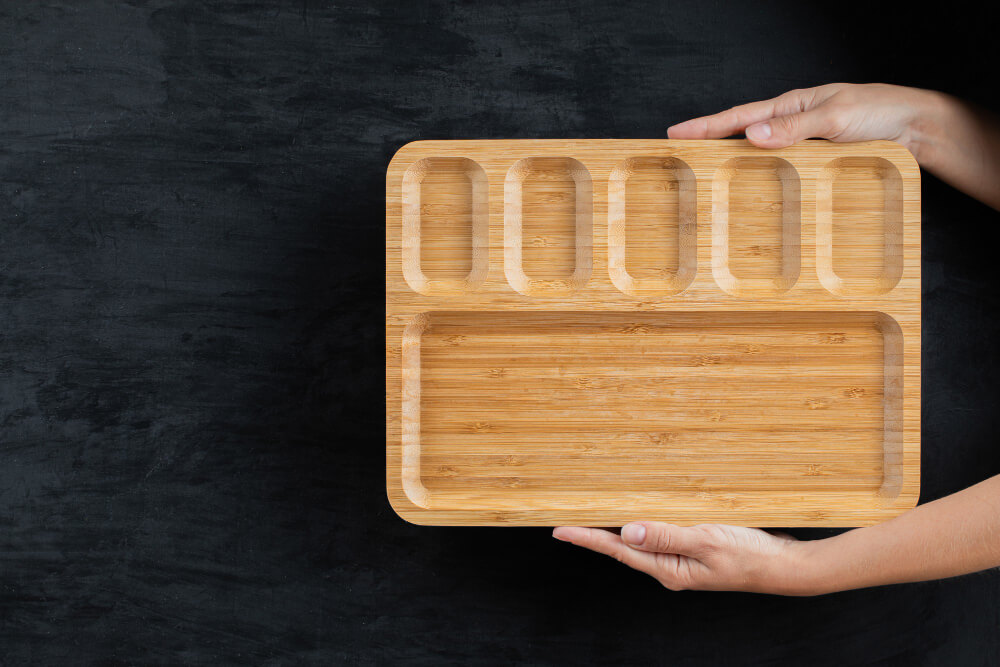
Compartment serving trays are more than just a tray with dividers—they’re a purposeful packaging solution that aligns with modern demands for both functionality and sustainability. Here’s how they play a key role in packaging strategy.
Why “compartment serving trays” matter
From the moment food leaves your kitchen or manufacturing facility, packaging tells a story. Using compartment serving trays sends a signal: you’re delivering organised, high-quality presentation and you care about the planet.
They allow multiple food items to be displayed and separated neatly, retaining flavour integrity and improving user experience. For example, tray-sections prevent sauces from merging, or crisp elements from going soggy. discountpackagingwarehouse.com.au+2goldleafindia.wordpress.com+2
At the same time, the packaging materials available today let you make a sustainable switch—plant-based fibre, sugar-cane pulp, compostable board—so you don’t sacrifice functionality for eco-credentials. biopak.com+1
The Benefits of Using Compartment Serving Trays
Here are some of the key gains you (and your clients) get when opting for compartment serving trays:
- Improved food presentation & user experience
Divided compartments help keep different dishes separate, maintain texture and flavour, and make presentation cleaner. discountpackagingwarehouse.com.au+1
For packaging and hospitality clients alike, that’s a value-add. - Practical functionality
- Easier transport and serving: tray with sections means you can deliver multiple items at once. tablematters.sg
- Portion control: for catering, events, institutional settings, the compartments help regulate serving sizes. stellinox.com
- Versatility: suitable for hot/cold, sauces, dry items, depending on construction.
- Sustainability credentials
- Many trays now use rapidly renewable or recycled materials: sugar-cane pulp, plant fibre, molded pulp from recycled board. naturpac.org+1
- Some are certified compostable or recyclable in industrial or home systems. biopak.com+1
So when you specify them for your client (for example, the packaging arm of your work with Carewell Group Pty Ltd), you’re aligning with their sustainability mission as well.
- Brand differentiation and eco-compliance
As regulations tighten and consumer awareness rises (especially in Australia), leaning into more eco-packaging becomes a business advantage. Using compartment serving trays made from sustainable materials can become a conversation piece. - Reduced waste & disposal cost
Some sources point out that compostable or recyclable options help avoid long-term disposal costs or landfill issues. sumkoka.com
Applications for Businesses (and How Carewell Group Can Help)
Given your work with Carewell Group (packaging, industrial & safety, logistics, etc), here are some ways compartment serving trays play into your offerings:
- Food service & catering clients: For restaurants, catering operations, take-away services, the trays provide both functional portioning and eco credentials.
- Ready‐meals or multi‐component food packs: When you have meals with mains + sides or sauces, a tray with compartments makes sense.
- Retail & grab-and-go packs: Especially in the lunch/salad/snack market, compartments help maintain quality and presentation.
- Custom branding & branded packaging: You can offer custom solutions (sizes, materials, print) which tie into Carewell’s “custom-solutions” service line.
- Sustainable packaging push: Given your page on Sustainability at Carewell, you can position these trays as one important component of the sustainable product range.
Materials, Design & Considerations
When choosing or specifying these trays (and helping clients choose), here are key dimensions to weigh:
- Material type
- Bagasse/sugar-cane pulp (compostable) — strong, good for hot/cold. oxypac.com.au+1
- Molded pulp (recycled paperboard) — lightweight, sustainable. Wikipedia
- Stainless steel or reusable trays (for long-term) — durable and hygienic, though higher cost. stellinox.com
- Traditional plastics / polypropylene – possible but less sustainable.
- Number of compartments & layout
Depending on meal types (main + 2 sides, dessert portion, etc) you might go 3-compartment, 4-compartment, 5 or more. The design needs align with food items. discountpackagingwarehouse.com.au - Food safety and suitability
Material must handle temperature, oils, sauces, refrigeration, delivery transit. Some compostable materials now handle hot and cold quite well. biopak.com+1 - Disposal / end-of-life
Key question: Is it industrial compostable, home compostable, recyclable? What waste streams are available in the client’s region? Without infrastructure, an “eco-tray” may still end up in landfill. - Branding & customer experience
The tray isn’t just packaging — it’s part of the experience. Custom printing, textures, structural integrity for transport all matter. - Cost vs volume
While sustainable materials can cost more, the brand value and regulatory alignment often offset. Source: compostable trays noted as cost-effective long-term. sumkoka.com
Challenges (and How to Address Them)
Because I’m riding shotgun (not steering), I’ll flag some bumps you might run into so you’re prepared:
- Material performance under heavy load or moist/saucy foods: Some compostable materials may struggle if they get saturated, or the food sits in them for long. Solution: test trays under real use-scenario.
- Supply chain & lead times: Custom sizes or premium materials may require longer lead time or higher MOQ.
- End-of-life confusion: If the local waste infrastructure doesn’t support composting, you risk green-washing perception. So it’s worth educating the end client and maybe providing disposal instructions.
- Cost sensitivity: Some clients may push back on premium cost. Framing it as brand investment + regulatory future-proofing helps.
- Compatibility with lids or transport stacking: Especially for take-away/delivery, ensuring the lid fits well and the tray remains stable is key.
How to Integrate with Carewell Group’s Offering
Given Carewell’s mission (“your one-stop solution for packaging, industrial & safety, logistics and 3PL needs”) and the range of packaging you already offer, here’s how you might integrate compartment serving trays into the offering:
- On the Carewell website: Add/update product pages under Packaging → Trays or Custom Solutions, clearly describing “compartment serving trays” with sustainable material options.
- Create a blog (this one) to drive awareness and search traffic for the focus keyword compartment serving trays, linking to the product pages.
- Cross-link: From your sustainability page to this blog and product pages, reinforcing the green credentials.
- In sales/proposals: When you sell packaging to food service clients, present compartment serving trays as an “upgrade” solution (better presentation + sustainable).
- Position as value-add: Not just packaging, but an enhancement of the food brand’s experience and credibility.
Key Takeaways
- Compartment serving trays combine functionality (divided meal sections, better presentation, transport convenience) with packaging optimisation (materials, brand value, sustainability).
- The trend towards sustainable materials in trays (bagasse, molded pulp, compostable board) is strong — and businesses like yours can capitalise on it.
- For your client portfolio (packaging-oriented), specifying, educating and executing around compartment serving trays can differentiate the offering and align with ESG/sustainability narrative.
- It’s not without challenges — material selection, end-of-life logistics and cost considerations are real. But you already have the skill-set to manage that.
- Finally: When you adopt “compartment serving trays” as a keyword and a category in your content/sales, you bring clarity to clients and help search visibility too.
Primary CTA: Request a Quote
Location: Carewell Group Pty Ltd, Unit 27/191 McCredie Road, Smithfield, NSW 2164
Phone: +61 0477 123 699
Email: sales@carewellgroup.com.au | info@carewellgroup.com.au | logistics@carewellgroup.com.au